
We managed four farm visits, one in Heriot, one in the Southland and two in the North Island….including Smedley station.
It’s safe to say that farms in NZ in general are quite different to farms in the UK, although they are starting to find they share similar challenges to us, succession for example.
Huge acreages, vast stock numbers and a distinct lack of lame sheep. The approach in NZ is different, because it has to be. Of the four farms we visited, ALL of then had incomes coming from ventures off the farm. They are driven by efficiency and profit. There were discussions where They mentioned they are paid to fence, so in some cases they are receiving support.
New Zealand has signed up to the Paris agreement and as such is required to reduce its carbon. As so much of the country is reliant on agriculture, the reduction of carbon must be from this industry. We visited Agresearch at Dunedin where they have looked at an EBV for carbon in sheep.
I was asked about diversification before I went away so I made a point of trying to find out. There is diversification in NZ, there is some tourism but not as much as the UK, or Wales in particular. There has been changes from sheep to dairy, alot of you will already know about this as it has been talked about a lot in recent years. This is looking likely to change, the rate of farms converting to dairy has reduced and the current drive is forestry.
Succession and diversification are coming together somewhat. The next generation cannot afford, or don’t want the debt of a large farm. Although cost per acre is lower in NZ, farm size is huge so the cost is as high or higher. What is happening in some cases is that the children of farms are buying part of the farm and selling the rest. They are looking then at kiwi growing, cherry trees, manuka honey farms as an income for themselves from that land. This means potentially an increase in small farms.
They had a nice phrase in NZ to describe people who are moving out of the city, or working full time and buying a field, keeping alpacas a cow a sheep or two. They call then life-stylers. There is an increasing amount of life-stylers too, I was quite surprised as to how many alpacas we saw on our travels!
Some land is being sold or rented for forestry too. As part of the carbon targets the NZ Government have a 1 billion trees programme in place to encourage tree planting. The fear for sheep producers and lamb processors is that sheep have been pushed up the hills by dairy and are likely to be pushed down by forestry, with little room left in the middle.
So maybe we can take some solace in that we aren’t alone with challenges we face, and maybe the grass isn’t always greener the other side of the world.
Farm visit to Heriot, North Island

View from the front door 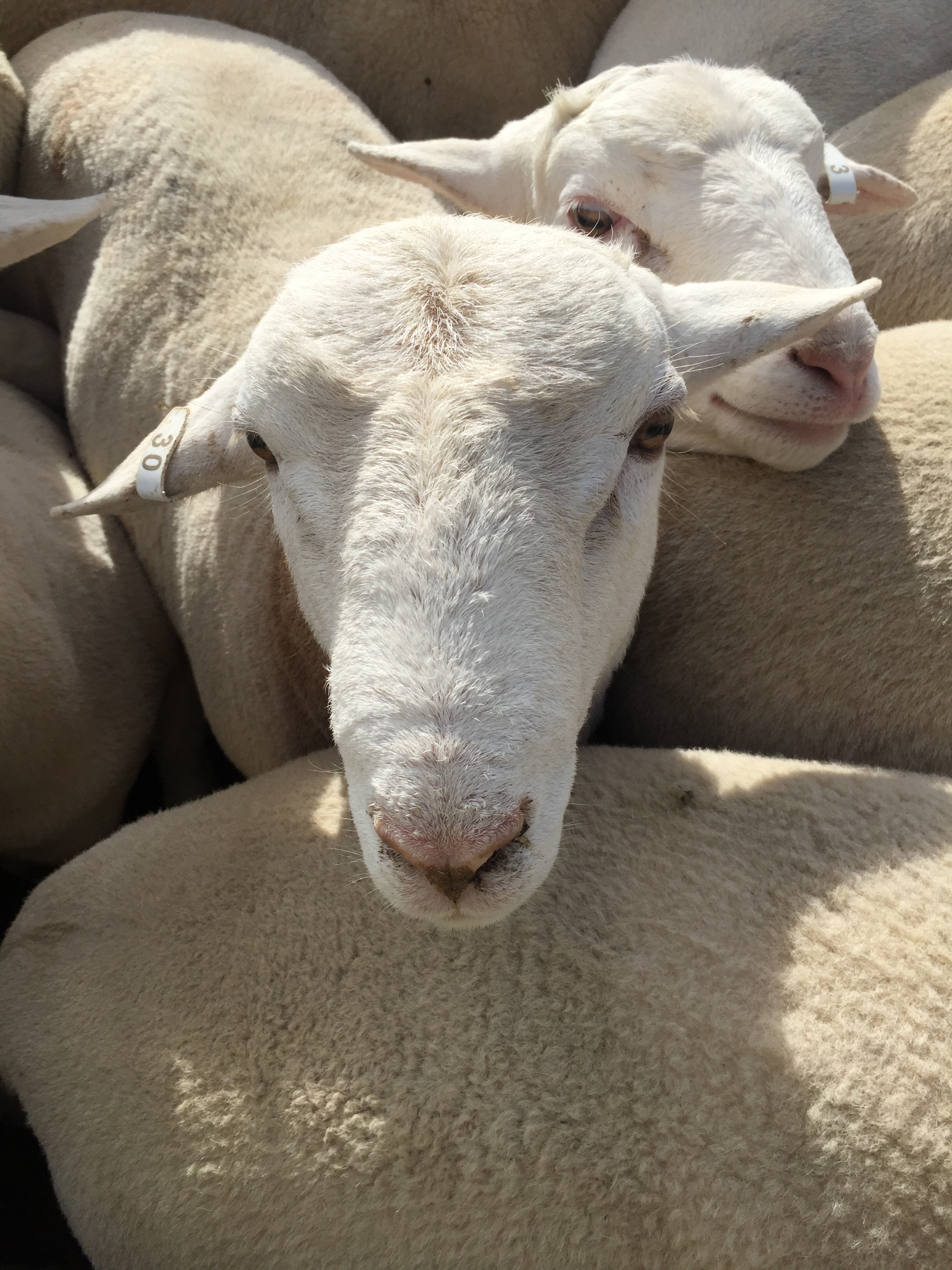
White Dorper rams 
White Dorper rams 
Lambs in handling pens 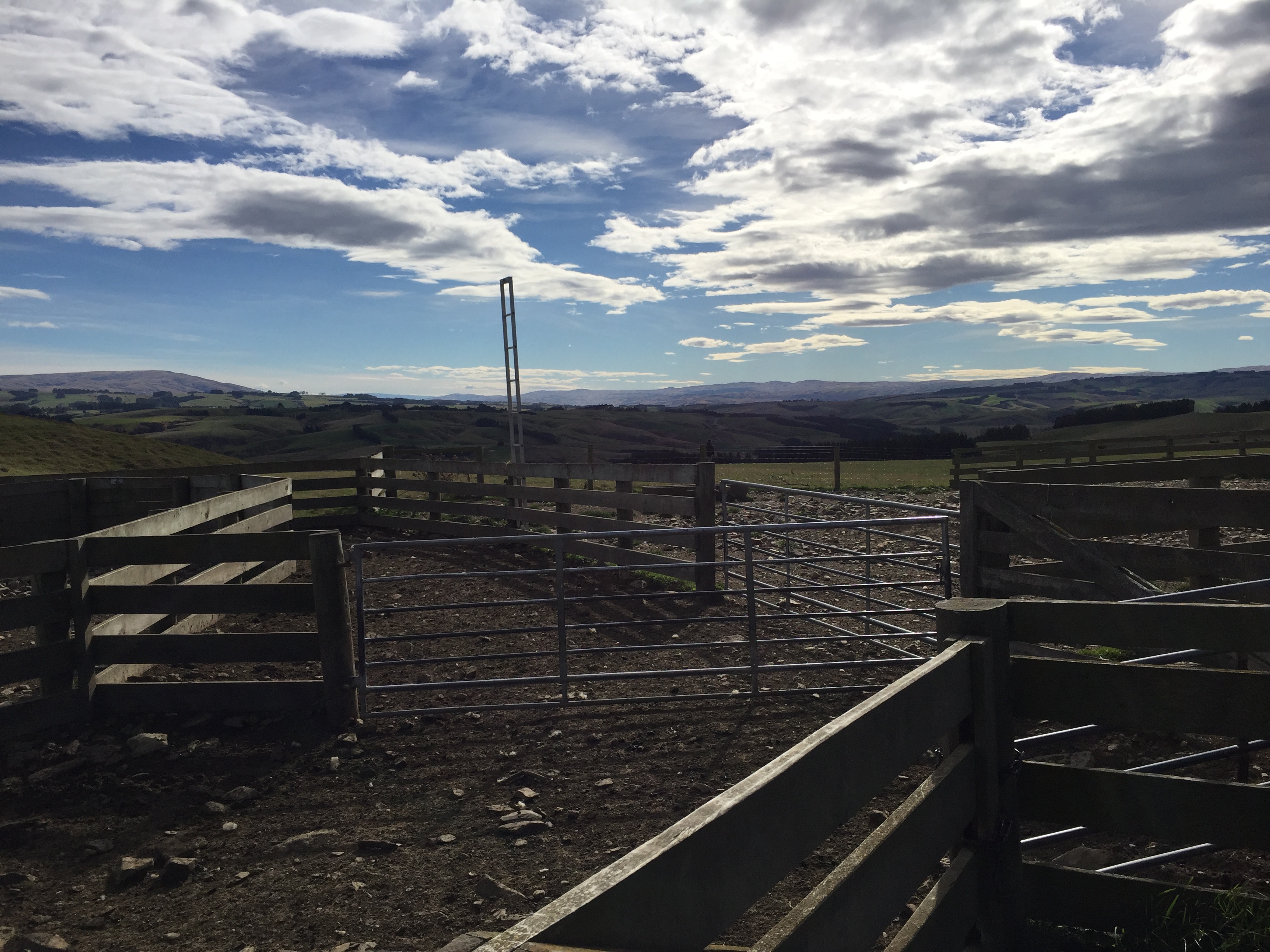
Handling pens with a view…on a good day!
Farm visit in the Southland

Palms used for shelter 
2000 ewes in a paddock 
2000 ewes in another paddock 
Original NZ gumboots
Farm visit Hawkes Bay, South Island

Look at that clover! 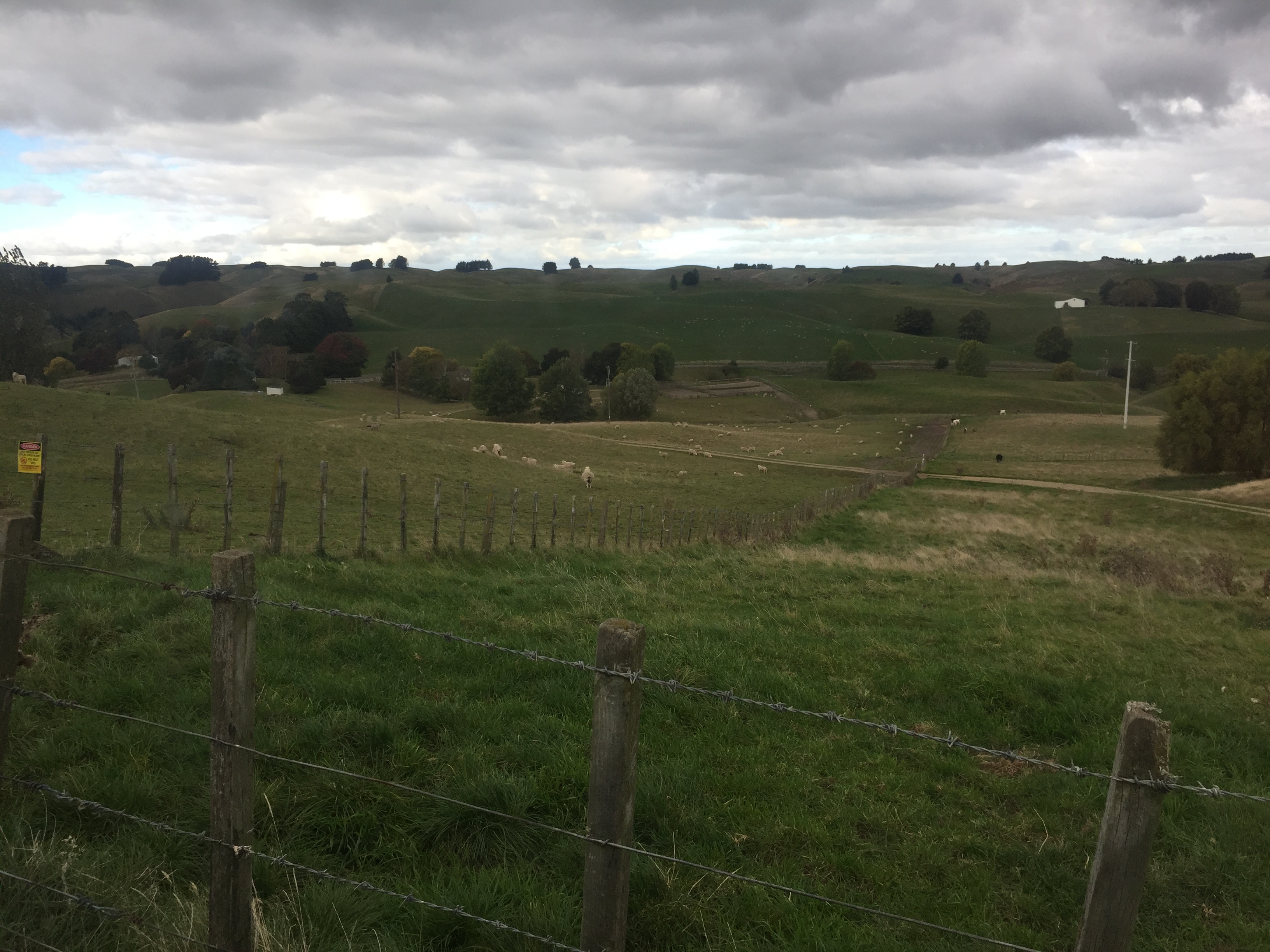
Sheep in paddocks 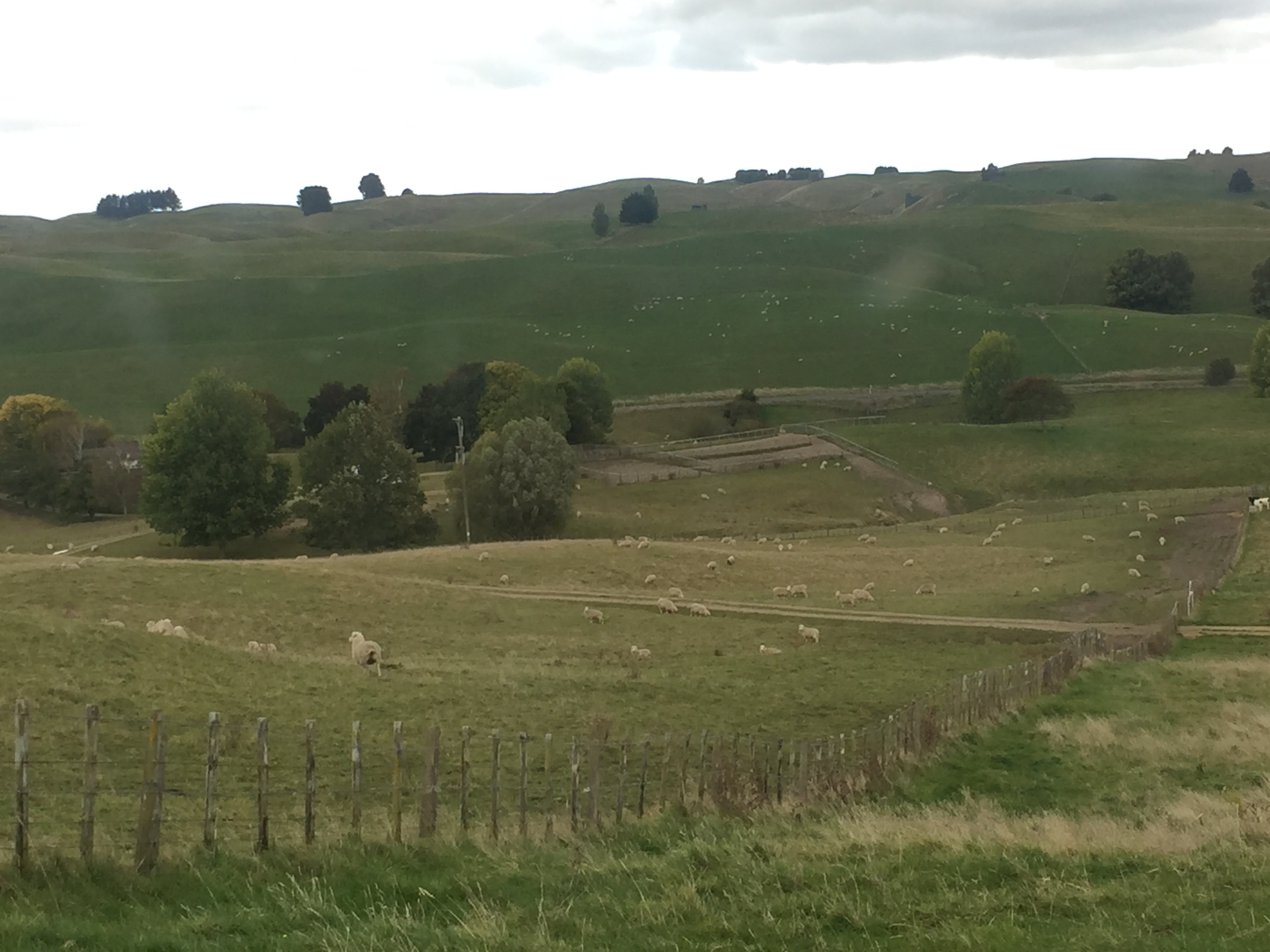
Sheep in paddocks 
Hill country, typical of the farm we visited who were finishing cattle as well as lambs
Other…

A lot of focus on producing lamb without antibiotics, for the American markets 
This was in Te Papa museum, Wellington. A whole section demonstrating how important agriculture has been to their Country 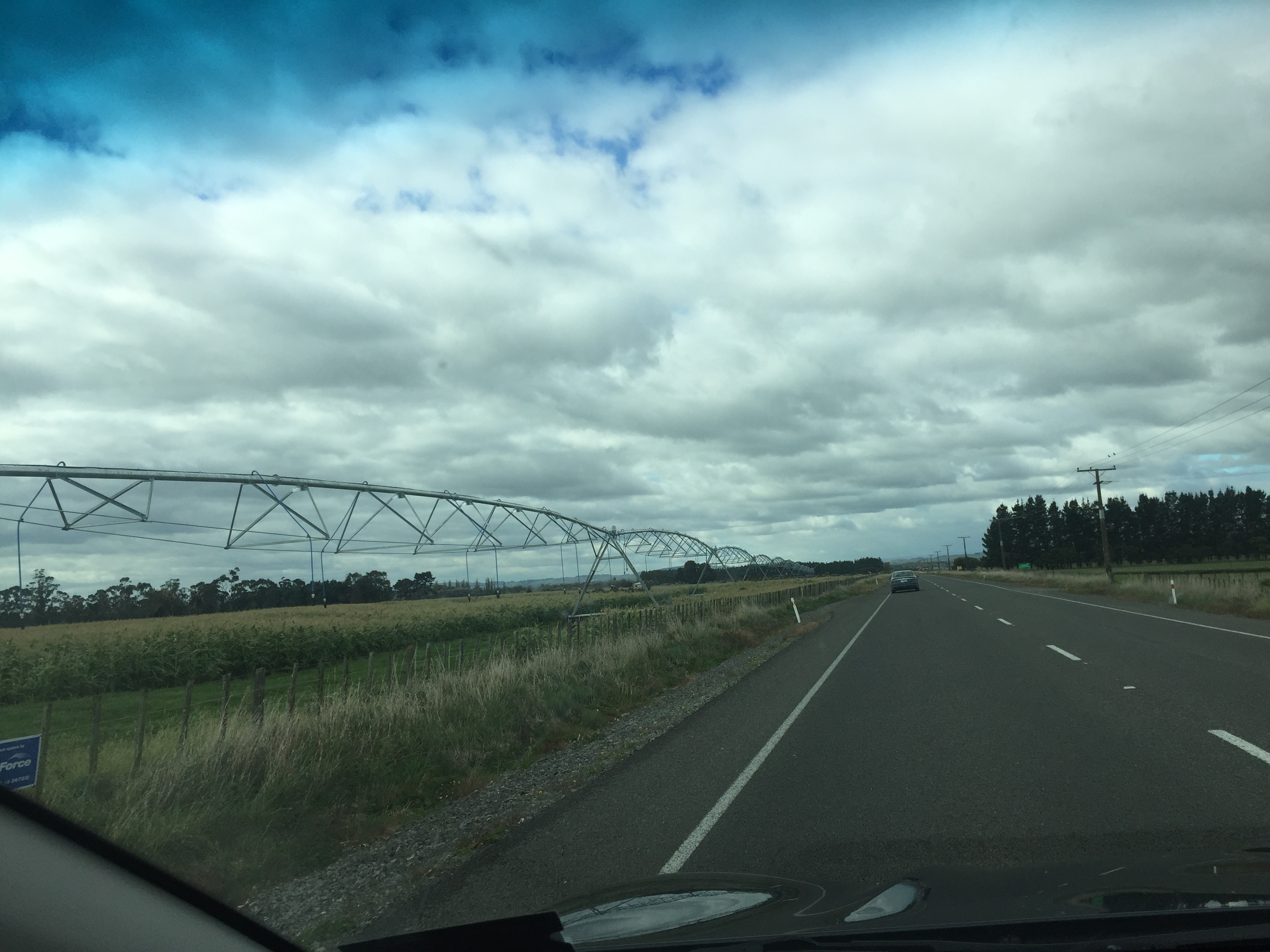
We saw a lot of irrigation booms as we were driving around, this is quite a small one
 Sheep, Shoes and Food